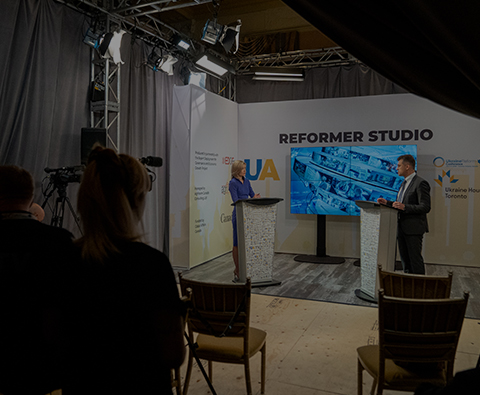

On 23 April 2026, UkraineInvest hosted one of the most practically-focused sessions of the EU-Ukraine Business Summit in Brussels – a 75-minute interactive Q&A bringing together senior decision-makers, international financial institutions and companies actively operating in Ukraine. The session was designed around a simple premise: rather than presentations, speakers responded directly to questions submitted in advance by businesses ensuring the discussion reflected what investors actually need to know.
The session was moderated by Maryna Khlystun, CEO of UkraineInvest and Vladyslava Grudova, Executive Director of the KSE Institute.
One of the most practical discussions centred on entry timelines. Dmytro Natalukha, Chairman of the State Property Fund of Ukraine, confirmed that the Fund’s portfolio includes a wide range of operational assets – from insulin production facilities to chemical fertiliser plants – with utilities, roads and electricity grids already in place. These assets are available for acquisition via the Prozorro online platform, with a timeline of up to 6 months from initial interest to sale.
The State Property Fund is also developing its PPP offer. A dedicated department has recently been established within the Fund to structure public-private partnership projects, including assets that cannot be fully privatised but can be made available to private investors through concession or partial ownership models. Once an asset moves into private hands, the full range of investment incentives, including industrial park benefits and localisation programmes are immediately available.
For manufacturers looking to start production quickly, state-owned brownfield assets represent a ready-made investment project – with existing infrastructure already in place, the entry timeline is significantly shorter and initial capital requirements considerably lower than greenfield development.
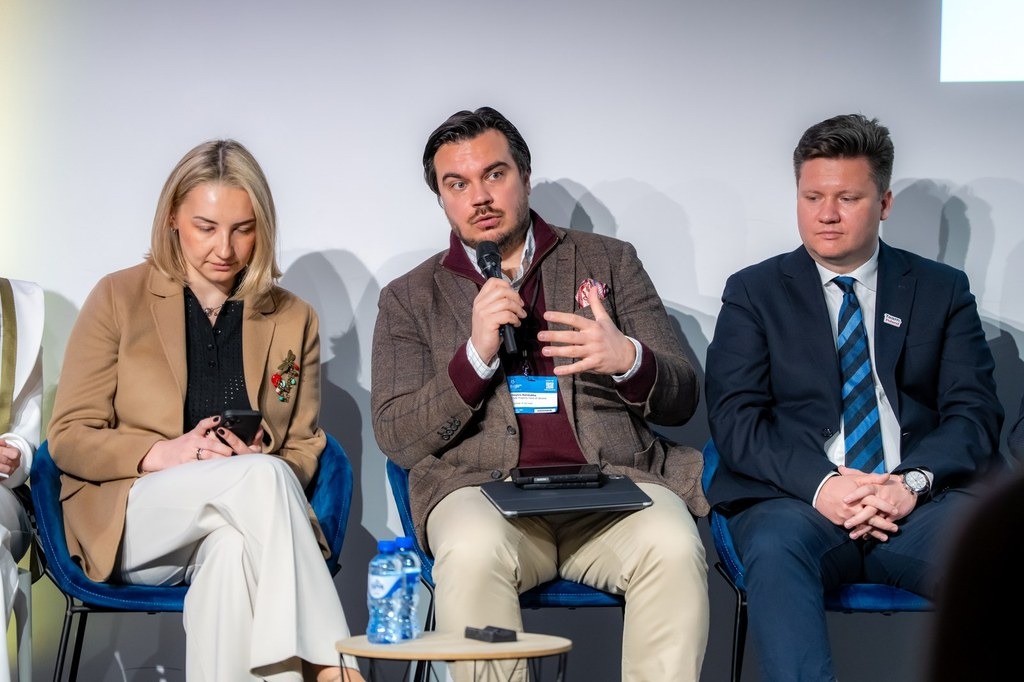
The loan volume available from international financial institutions is significant. IFC ramps up its financing in Ukraine with a number of new large investments across sectors to be announced shortly. Kateryna Chechel from IFC confirmed that its current portfolio in Ukraine stands close to $3 billion, with a similar pipeline planned for the next calendar year. IFC focuses on four strategic sectors: the financial sector, where it works through risk-sharing facilities, direct lending and equity investments, agrifood production and processing, essential infrastructure including energy, and private equity funds.
The European Investment Bank, represented by Vyacheslav Ovechkin, deployed €1.5 billion in Ukraine in 2025 alone, confirming Ukraine as its top priority jurisdiction outside the European Union. With regards to the private sector in Ukraine, EIB provides partial portfolio guarantees and multiple beneficiary intermediated loans to Ukrainian partner banks for SMEs’ support, invests into private equity funds including tech-focused instruments, and is launching a new direct lending product for bigger corporate clients – the EU Foreign Direct Investment and Single Market Initiative.
Malgorzata Hejduk from BGK outlined a new €195 million guarantee-backed investment loan instrument launched just weeks before the Summit, which offers financing in energy, transport and logistics as well as manufacturing and processing sectors, with financing tenors of up to 15 years, project size up ranged €5-50 million, a 90% EU guarantee cover within the Ukraine Facility, and minimum equity contribution of 25% from the investor. The instrument is open to both Ukrainian and European investors.
Additionally, BGK can offer all available instruments to support Polish exports to Ukraine, including buyer’s credit, buyer’s bank credit, letter of credit financing and bank guarantees. The long-term financing can be provided under buyer’s credit, whereby BGK provides direct loan to Ukrainian companies, with financing covering up to 85% of the export contract value signed with the Polish exporter.
Gabriel Blanc, Team leader for reconstruction policy and implementation of the Ukraine Investment Framework at the European Commission, announced that the Call for Expressions of Interest is now open on a rolling basis – investment projects can be submitted at any time and receive real-time assessment. The European Commission is also working with a dedicated consulting team to support private sector engagement and has expanded its internal team responsible for direct interaction with private investors within DG ENEST.
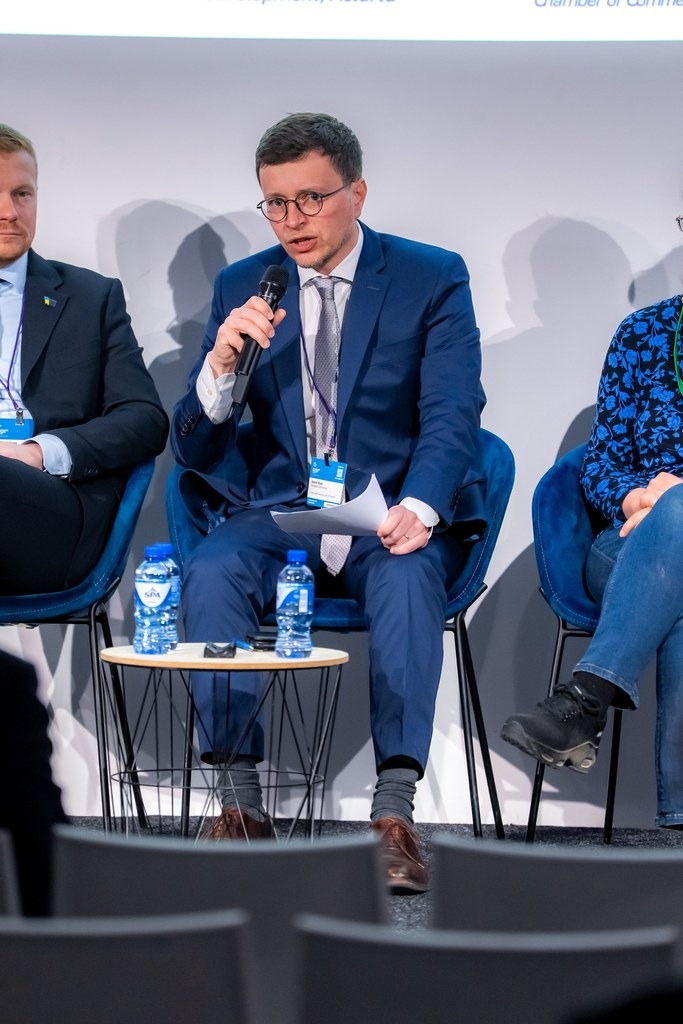
A common concern among investors is the question of risk coverage. Jan Rekiel from KUKE provided a direct answer: since resuming operations in Ukraine in June 2022, KUKE has insured over €3 billion in trade turnover, covering both commercial and war-related risks. KUKE also recently introduced the first-ever reinsurance product for cargo transportation war risk – a market first that no other export credit agency has offered.
On the investment side, KUKE’s current exposure has reached approximately €400 million over the past year, covering existing investments, acquisitions, brownfield and greenfield investments of Polish companies in Ukraine. Additionally, insurance coverage is available also to international companies under the condition of minimum – 30% Polish content, making the insurance from KUKE accessible to international investors working with Polish partners or suppliers.
Michal Kapa from PFR’s Strategy Department outlined how BGK, KUKE and PFR can work together to combine EU guarantees, Ukraine Facility instruments and national Polish tools into a single investable structure, providing investors with a comprehensive package that addresses financing, insurance and risk mitigation in one coordinated approach.
A practical recommendation from the discussion: engage financial institutions as early as possible in the project preparation process – the earlier a bank is involved, the better the documentation package and the smoother the overall process. Starting with smaller projects to build mutual understanding before scaling is also advisable.
One telling example: after PFR and KUKE closed an acquisition deal for a Ukrainian IT company by a Polish software house, few other Polish companies immediately approached them expressing interest in the Ukrainian market. Success stories are among the most effective catalysts for broader investor engagement.
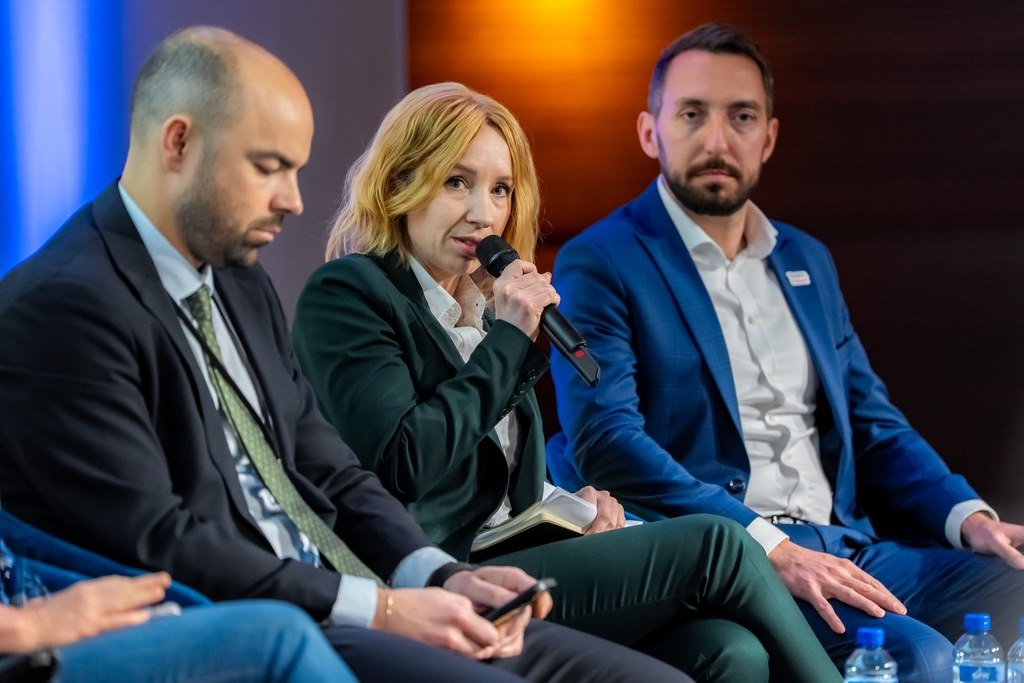
Across all financial institutions, one message was consistent: capital is available, but the gap is investment-ready projects. Kateryna Chechel from IFC outlined key conditions that make a project bankable: risks that are allocated and manageable; a commercially viable business model with a credible sponsor; and a clear financing structure that addresses how risks will be covered through insurance or guarantees.
Gabriel Blanc highlighted Ukraine’s ongoing public investment management reform and the establishment of a new project preparation unit – a body coordinating the allocation of project preparation funding to priority projects, as important structural steps forward. The European Commission is also working with financing institutions to provide technical assistance for project preparation, alongside the World Bank Group, European Investment Bank and EBRD.
The takeaway for investors: projects do not need to be fully bankable from day one – but they need to have these foundations in place before approaching financing institutions. IFC confirmed it is ready to help make a project bankable, even if it is not there yet, provided the fundamentals are sound.
Andrii Teliupa, Advisor to the Minister of Economy of Ukraine, highlighted manufacturing as Ukraine’s top growth priority, supported by both government instruments and EU frameworks. A notable signal: Ukraine already has over 500 companies producing drones, with annual output exceeding 7 million units – an indicator of the speed at which new production capacity can be built under wartime conditions. The government is actively developing new production sites and sees joint ventures with international partners as a key avenue for growth, particularly in manufacturing, agro-processing, energy and construction materials.
Yuliya Bereshchenko from Astarta, one of Ukraine’s most active agro-processing investors, supported by UkraineInvest in accessing the state programme for investment projects with significant investments, highlighted soybean processing as a key growth area, with concrete opportunities for international partners in storage, processing and logistics along the value chain – sectors where EU alignment and traceability requirements are increasingly creating investment opportunity rather than constraint.
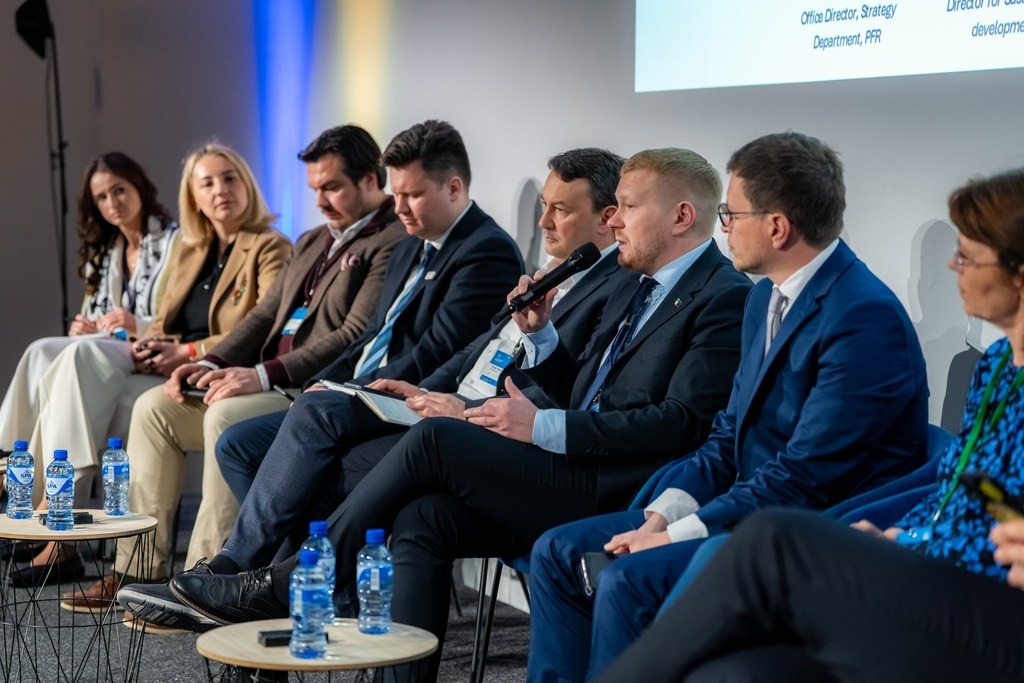
Sergii Nazarenko from Ukrenergo outlined Ukraine’s immediate energy investment priorities: distributed generation capacity, energy storage and grid protection – all urgent ahead of the next winter season. The imbalance between electricity generation and consumption across different regions of Ukraine makes decentralised energy solutions particularly important. Ukrenergo also highlighted the need for gas-powered generation in combination with storage as a critical near-term investment, alongside longer-term development of additional capacity to maintain Ukraine’s competitive position within the integrated European energy market.
The broader message for industrial investors was clear: energy resilience is not a secondary consideration – it is a foundational element of any viable project in Ukraine today. Every investment plan should include an energy strategy from the outset.
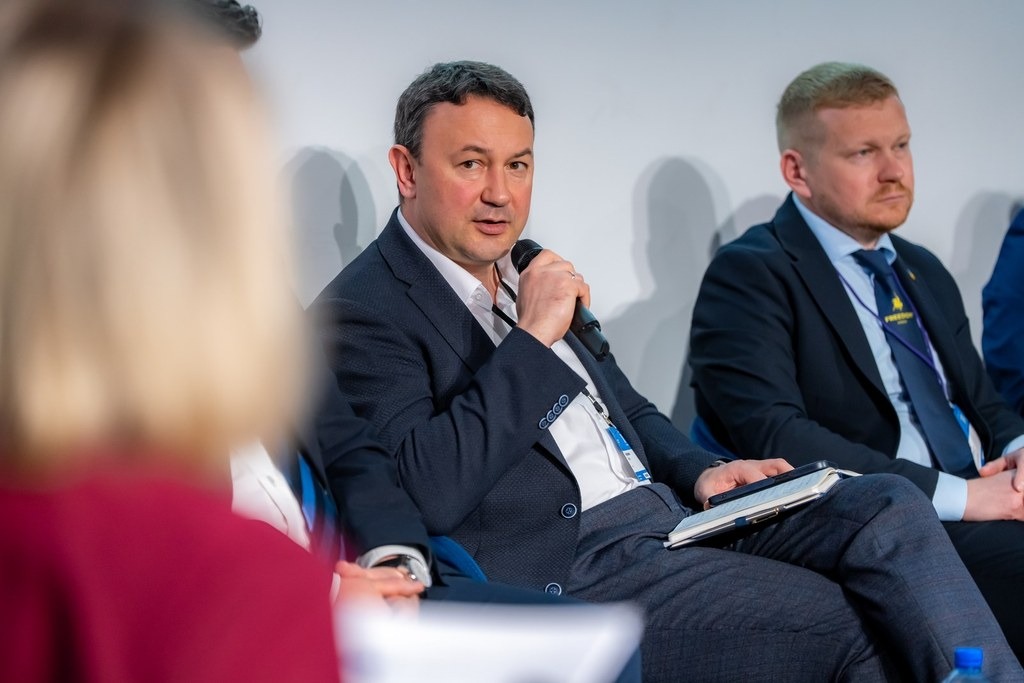
Maryna Khlystun detailed the current framework of investment incentives available in Ukraine: 30% CAPEX compensation for qualifying investments, industrial park benefits including tax exemptions and infrastructure support, duty and VAT waivers on equipment imports, agri-processing grants and a fast-track mechanism to convert agricultural land to industrial or energy use in approximately 1.5 months. For larger or cluster investors, Ukraine also supports the establishment of new industrial parks, with operator status providing additional benefits and compensation for utility infrastructure development.
Maryna Khlystun placed particular emphasis on industrial manufacturing and agro-processing as priority sectors for investment today. Ukraine has developed a dedicated set of instruments to support localisation of production, including the “Made in Ukraine” framework, which provides additional incentives for companies establishing or expanding manufacturing capacity in Ukraine. These instruments are designed to make industrial projects not only viable but competitive within the EU single market.
Anna Liubyma from the Ukrainian Chamber of Commerce and Industry highlighted the importance of regional knowledge in investment decisions. Ukraine’s regions differ significantly in their sectoral priorities, available incentives and investment conditions. Regional business support networks, chambers of commerce and local authorities play a practical role in helping investors assess specific opportunities and connect with reliable local partners – a step that experienced investors consistently identify as critical to a successful market entry. The Chamber operates through 25 regional branches with on-the-ground knowledge and direct connections to local businesses and authorities.
Taken together, the discussion pointed to a clear shift in how Ukraine is perceived by investors today. The fundamentals for investment are increasingly in place – from available capital and risk mitigation instruments to government support and a growing pipeline of opportunities, while the focus is now moving towards execution, project preparation and long-term partnerships.
UkraineInvest is Ukraine’s investment promotion agency and your single point of contact throughout the investment journey – from initial inquiry and regulatory guidance to partner matching and project facilitation. If you have questions about market entry, available incentives, state assets or financing instruments, our team is ready to assist. Contact us via [email protected] and we will help you navigate opportunities and move your project forward.
Follow us on Facebook, Twitter, LinkedIn, or YouTube.