
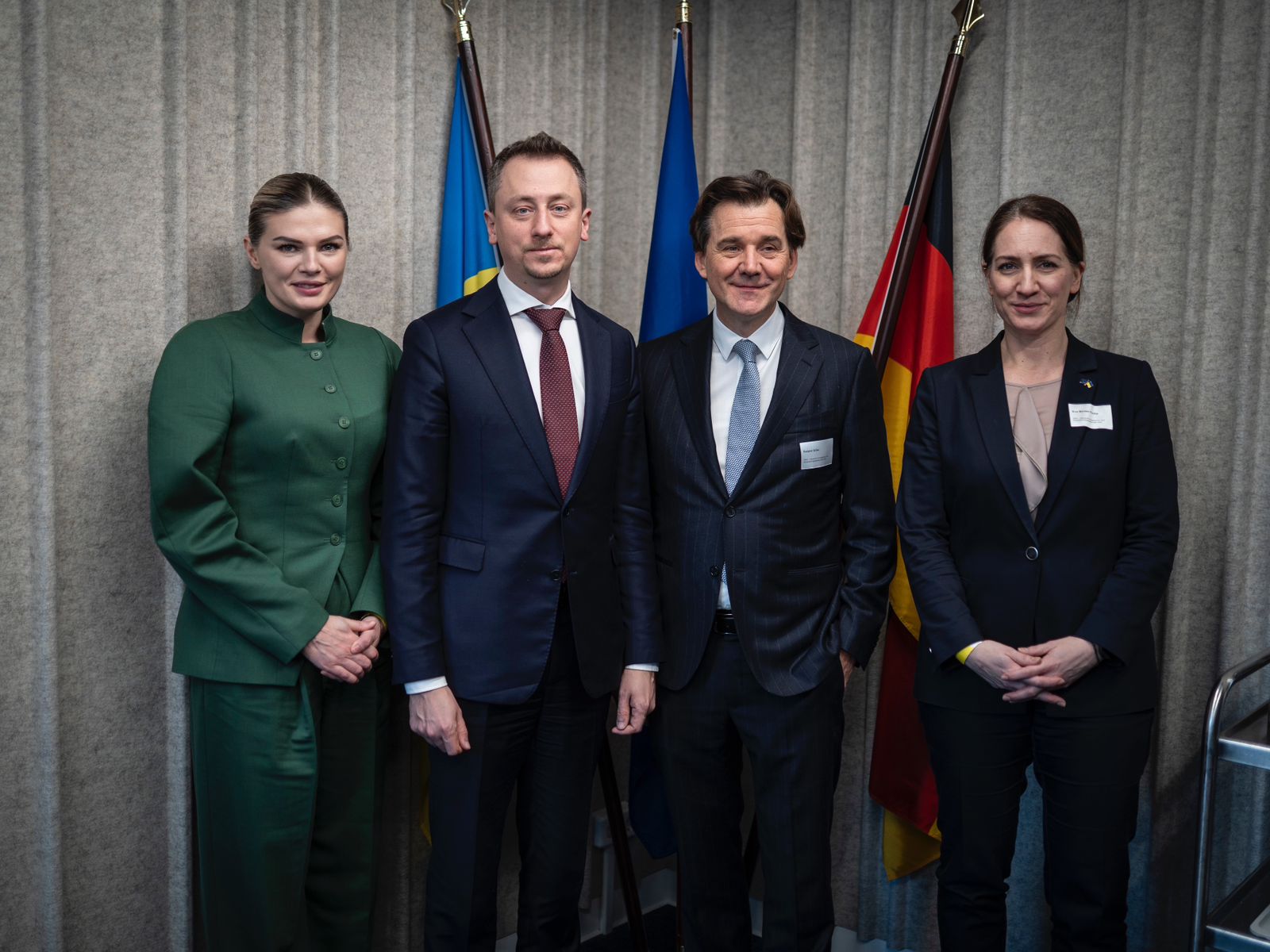
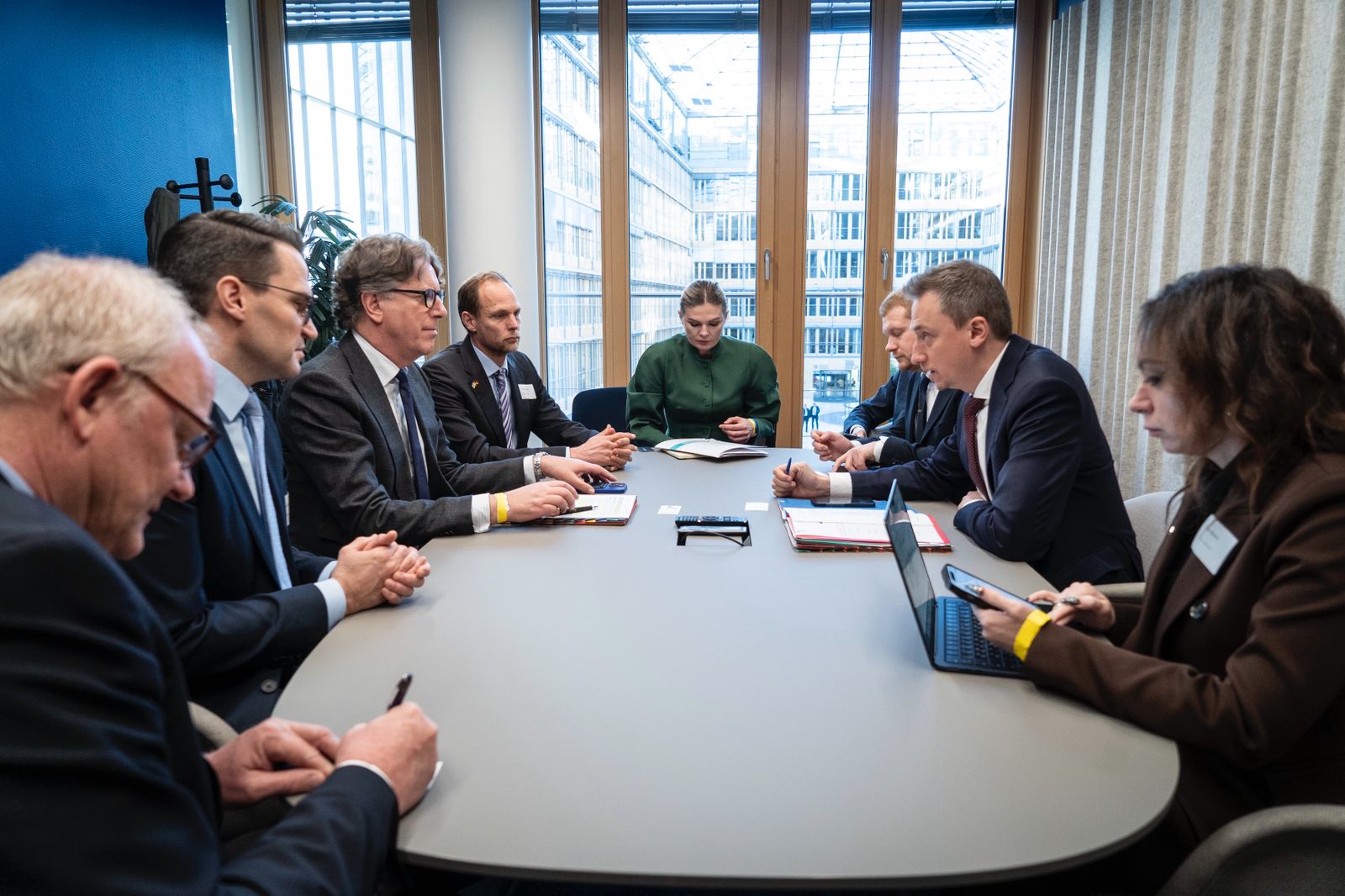
Executive Director of UkraineInvest, Marina Khlystun, spoke about the advantages and opportunities of long-term investment in Ukraine during several meetings with German investors in Berlin and Düsseldorf in December 2025 – January 2026.
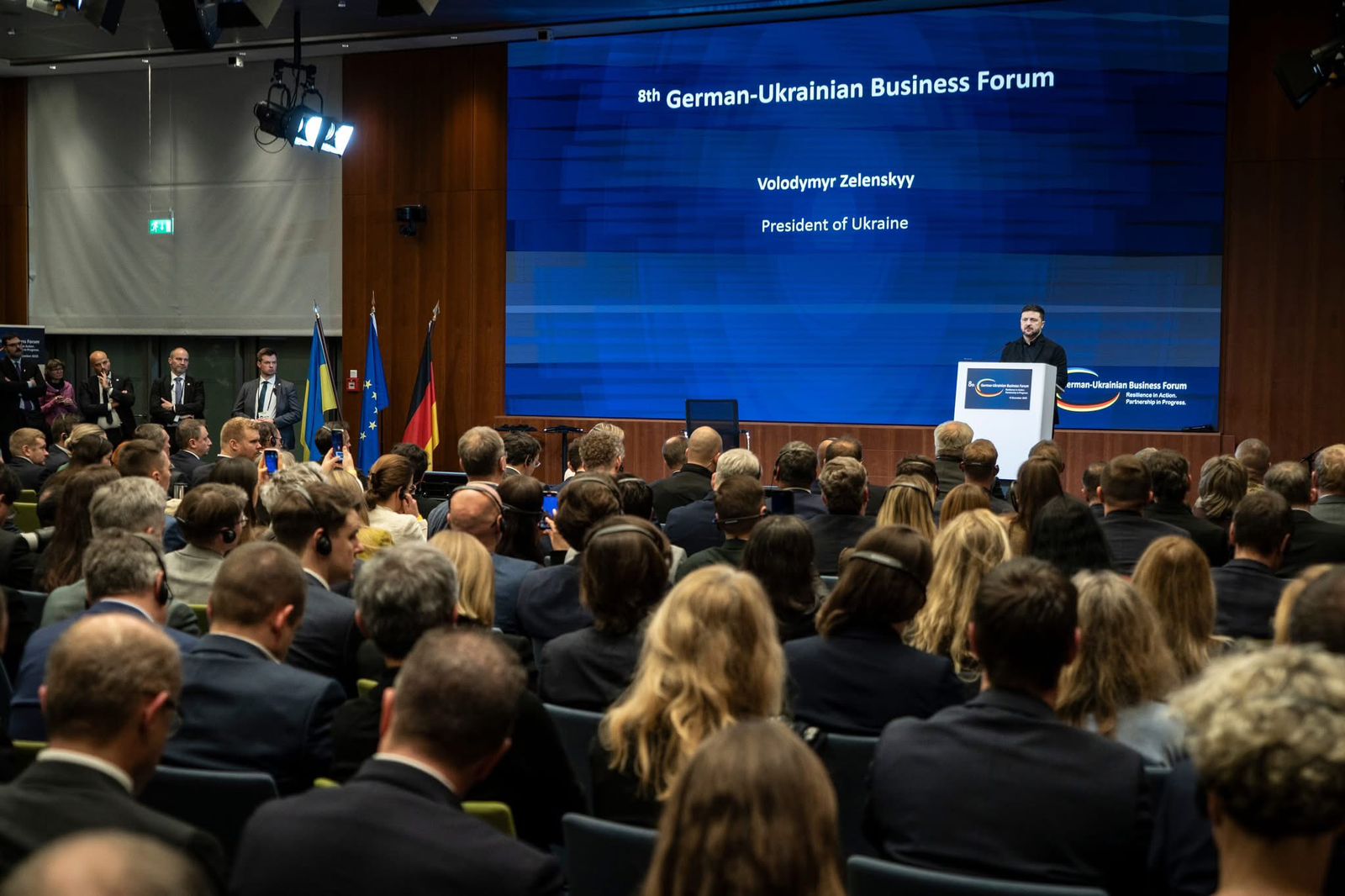
During her presentation at the 8th German-Ukrainian Business Forum on 15 December last year, titled “Introduction to Ukrainian FDI Strategy and Support Measures”, Marina Khlystun acknowledged that the scale of losses Ukraine has suffered as a result of many years of Russian aggression is indeed significant. At the same time, for investors this creates a unique opportunity not only to restore what has been destroyed, but to rebuild better — a modern, energy-efficient, digital economy integrated with the EU.
Among Ukraine’s key advantages, the Executive Director of UkraineInvest highlighted the country’s skilled workforce, access to raw materials (including 22 of the 34 critical raw materials available in Ukraine), and competitive production costs.
“These opportunities are fully aligned with Ukraine’s national development plan. Priority sectors include energy, agro-industry, digital transformation, critical materials, transport, and defence technologies,” noted the Executive Director of UkraineInvest.
The mandate of UkraineInvest covers the entire investment cycle, ensuring that investors receive continuous support from the project concept stage through to implementation. In essence, UkraineInvest acts as a one-stop shop for investors, providing operational assistance and coordination with government authorities, she said.
Marina Khlystun also noted that a special state support mechanism is available for investors implementing large-scale projects, within the framework and forms defined in a special investment agreement between the state and the investor. For projects with capital investments starting from EUR 12 million, the state offers corporate income tax exemptions, VAT and customs duty exemptions on equipment, compensation for infrastructure connection costs, and access to land plots without auctions. Altogether, these incentives allow investors to recover up to 30% of their capital expenditures.
Marina Khlystun outlined priority areas for cooperation with companies from the federal state of North Rhine–Westphalia.
First and foremost, this includes energy and energy infrastructure. Ukraine is rebuilding and decentralising its energy system, focusing on renewable energy, smart grids, and energy storage systems. Companies from North Rhine–Westphalia, which possess strong expertise in industrial energy solutions, hydrogen technologies, and grid management, are natural partners in this transformation.
Critical raw materials and green industrial value chains are also gaining increasing importance. Ukraine holds significant reserves of critical minerals, while North Rhine–Westphalia has deep expertise in their processing, refining, and industrial application.
The Head of UkraineInvest emphasised that even amid the war, German businesses continue to expand their presence in the Ukrainian market. In 2025 alone, 22 new companies with German capital were registered in Ukraine. German investors are continuing to expand production, investing hundreds of millions of euros.
Marina Khlystun cited several examples of such investments:
Through the implementation of these and many other investment projects in Ukraine, Germany is reinforcing its position as one of Ukraine’s key strategic investors — with total German investments already exceeding USD 2 billion.
The Head of UkraineInvest also focused on the critically important issue of risk mitigation for German investors, emphasising that Ukraine already has state mechanisms for political and war risk insurance, complemented by international insurers and export credit agencies. This enables companies to obtain structured protection of assets and investments.
In addition, UkraineInvest actively supports project preparation, from identifying local partners and suppliers to conducting feasibility studies, selecting locations, and providing access to the national portfolio of ready-to-invest projects.
“Taken together, these instruments transform investment in Ukraine from a high-risk environment into a structured, supported, and bankable opportunity,” concluded Marina Khlystun.
Follow us on Facebook, Twitter, LinkedIn, or YouTube.